Cloud computing has become an important part of modern businesses. Companies of all sizes now use cloud platforms to manage applications, store data, improve business operations, and support digital growth. Among different cloud platforms, Amazon Web Services (AWS) is one of the most trusted and widely used cloud computing solutions in the world.
While AWS offers flexibility, scalability, and advanced cloud services, many businesses often face challenges such as high cloud costs, unused resources, slow performance, and poor cloud management. This is where AWS Cloud Optimization becomes important.
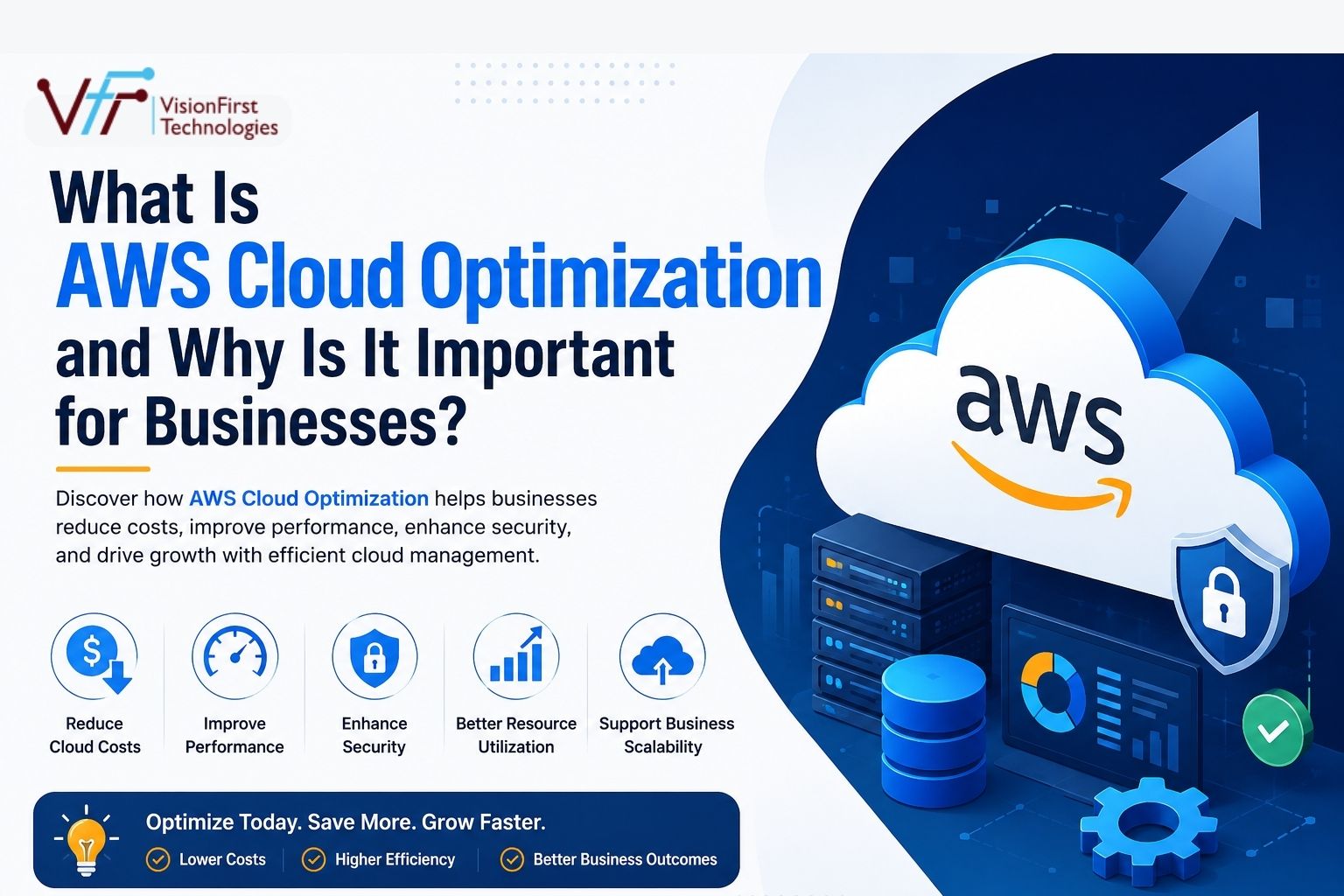
AWS Cloud Optimization helps businesses improve cloud performance, reduce unnecessary costs, enhance security, and use cloud resources more efficiently. It allows organizations to get the maximum value from their AWS infrastructure while maintaining smooth and reliable business operations.
What Is AWS Cloud Optimization?
AWS Cloud Optimization is the process of improving the performance, efficiency, and cost management of AWS cloud infrastructure. It involves analyzing cloud resources, monitoring workloads, removing unused services, improving security settings, and optimizing applications for better performance.
The main goal of AWS optimization is to ensure that businesses are using the right cloud resources according to their operational needs without wasting money on unnecessary services.
AWS optimization includes:
- Cost optimization
- Performance monitoring
- Resource management
- Security improvements
- Storage optimization
- Network optimization
- Application performance enhancement
- Cloud automation
Businesses that optimize their AWS environment can improve productivity, reduce downtime, and achieve better business efficiency.
Why AWS Cloud Optimization Is Important for Businesses
Many businesses move to AWS because it offers flexible and scalable cloud solutions. However, without proper optimization, cloud infrastructure can become expensive and difficult to manage.
Here are the main reasons why AWS Cloud Optimization is important for businesses.
1. Reduces Unnecessary Cloud Costs
One of the biggest reasons companies invest in AWS optimization is to reduce cloud expenses. Many organizations pay for unused or oversized cloud resources without realizing it.
For example:
- Running unused virtual machines
- Overprovisioned storage
- Idle databases
- Unused backup systems
- Inefficient workload distribution
AWS optimization helps identify these issues and remove unnecessary spending. Businesses can scale resources according to actual usage and avoid paying for services they do not need.
Cost optimization allows companies to use their cloud budget more effectively.
2. Improves Cloud Performance
Slow applications and poor system performance can affect customer experience and business productivity. AWS Cloud Optimization helps improve the performance of applications, websites, and cloud workloads.
Optimization techniques include:
- Load balancing
- Resource scaling
- Faster data processing
- Network optimization
- Storage performance improvements
These improvements help businesses provide faster and smoother digital experiences to customers.
3. Enhances Security and Compliance
Cloud security is very important for businesses handling customer data, financial information, and sensitive business records.
AWS optimization helps organizations:
- Identify security risks
- Improve access control
- Configure firewalls properly
- Encrypt sensitive data
- Monitor suspicious activities
- Maintain compliance standards
A secure cloud environment reduces the risk of cyberattacks and data breaches.
4. Better Resource Utilization
Many businesses use more cloud resources than required. This creates unnecessary operational costs and reduces efficiency.
AWS Cloud Optimization helps companies use cloud resources in a smarter way by:
- Monitoring usage patterns
- Removing unused services
- Adjusting server capacity
- Optimizing storage usage
- Automating workload management
Better resource utilization improves operational performance and reduces waste.
5. Supports Business Scalability
As businesses grow, their cloud infrastructure requirements also increase. AWS optimization ensures that systems can scale smoothly according to business demand.
Optimized AWS environments can:
- Handle higher traffic
- Support growing applications
- Improve system reliability
- Reduce downtime during traffic spikes
This flexibility is especially important for e-commerce businesses, SaaS companies, startups, and enterprises experiencing rapid growth.
Key Areas of AWS Cloud Optimization
AWS Cloud Optimization includes several important areas that work together to improve cloud efficiency.
Cost Optimization
Cost optimization focuses on reducing unnecessary cloud spending by analyzing resource usage and implementing cost-saving strategies.
Businesses can save money through:
- Reserved instances
- Auto scaling
- Spot instances
- Storage lifecycle management
- Removing unused resources
Performance Optimization
Performance optimization ensures applications and systems run smoothly without delays or interruptions.
This includes:
- Improving server performance
- Optimizing databases
- Faster content delivery
- Better workload balancing
Security Optimization
Security optimization helps businesses protect cloud infrastructure from cyber threats and unauthorized access.
Important security practices include:
- Identity and access management
- Multi-factor authentication
- Data encryption
- Security monitoring
- Compliance management
Operational Optimization
Operational optimization improves daily cloud management processes and reduces manual work through automation.
Businesses can automate:
- Backups
- Monitoring
- Deployment processes
- Resource scaling
- Reporting systems
Automation saves time and improves operational efficiency.
Common AWS Cloud Optimization Challenges
Although AWS offers many benefits, businesses may face several challenges without proper optimization.
Lack of Cloud Visibility
Organizations sometimes struggle to understand where cloud costs are increasing or which services are consuming more resources.
Overprovisioning Resources
Many businesses purchase larger cloud resources than required to avoid performance problems, but this increases unnecessary costs.
Poor Cloud Monitoring
Without proper monitoring tools, businesses may fail to detect performance issues, downtime risks, or security threats.
Complex Cloud Architecture
Managing multiple AWS services can become complicated, especially for growing businesses with large cloud environments.
Professional AWS optimization services help solve these challenges effectively.
Best Practices for AWS Cloud Optimization
Businesses can improve cloud efficiency by following some important AWS optimization practices.
Monitor Cloud Usage Regularly
Continuous monitoring helps identify unnecessary spending and performance issues early.
Use Auto Scaling
Auto scaling automatically adjusts cloud resources based on traffic and workload demands.
Remove Unused Resources
Unused storage, servers, and databases should be removed to reduce cloud expenses.
Optimize Data Storage
Businesses should move infrequently used data to lower-cost storage options.
Implement Security Best Practices
Strong cloud security policies protect business data and improve compliance management.
Use Cloud Automation
Automation simplifies cloud management and reduces manual operational tasks.
Industries That Benefit from AWS Cloud Optimization
Many industries are using AWS optimization services to improve business operations and reduce cloud management complexity.
E-commerce
Online businesses use AWS optimization to handle website traffic, improve customer experiences, and reduce downtime.
Healthcare
Healthcare providers use optimized cloud environments for secure patient data management and operational efficiency.
Finance and Banking
Financial organizations need cloud optimization for secure transactions, compliance, and real-time data processing.
Education
Educational platforms use AWS optimization for online learning systems and digital infrastructure management.
IT and Software Companies
Technology companies optimize AWS infrastructure to improve software performance and support scalable applications.
Future of AWS Cloud Optimization
Cloud technology continues to evolve rapidly. Businesses are increasingly adopting AI-driven cloud management, predictive analytics, and intelligent automation tools for AWS optimization.
Future AWS optimization trends may include:
- AI-powered cloud monitoring
- Automated cloud cost management
- Predictive scaling solutions
- Advanced cybersecurity automation
- Sustainable cloud computing practices
Companies that invest in cloud optimization today can prepare their infrastructure for future business growth and digital transformation.
Why AWS Optimization Matters
AWS Cloud Optimization Service in India is an essential process for businesses that want to improve cloud performance, reduce operational costs, enhance security, and support long-term growth. Proper optimization helps organizations use AWS resources efficiently while maintaining reliable and scalable cloud operations.
As businesses continue moving towards digital transformation, cloud optimization will play a major role in improving operational efficiency and business productivity. Companies that regularly monitor and optimize their AWS environment can reduce waste, improve customer experiences, and stay competitive in the modern digital market.
Businesses looking for professional AWS Cloud Optimization Services can explore advanced cloud solutions offered by Vision First to improve cloud infrastructure, manage operational costs, and support business growth through reliable AWS technologies.