

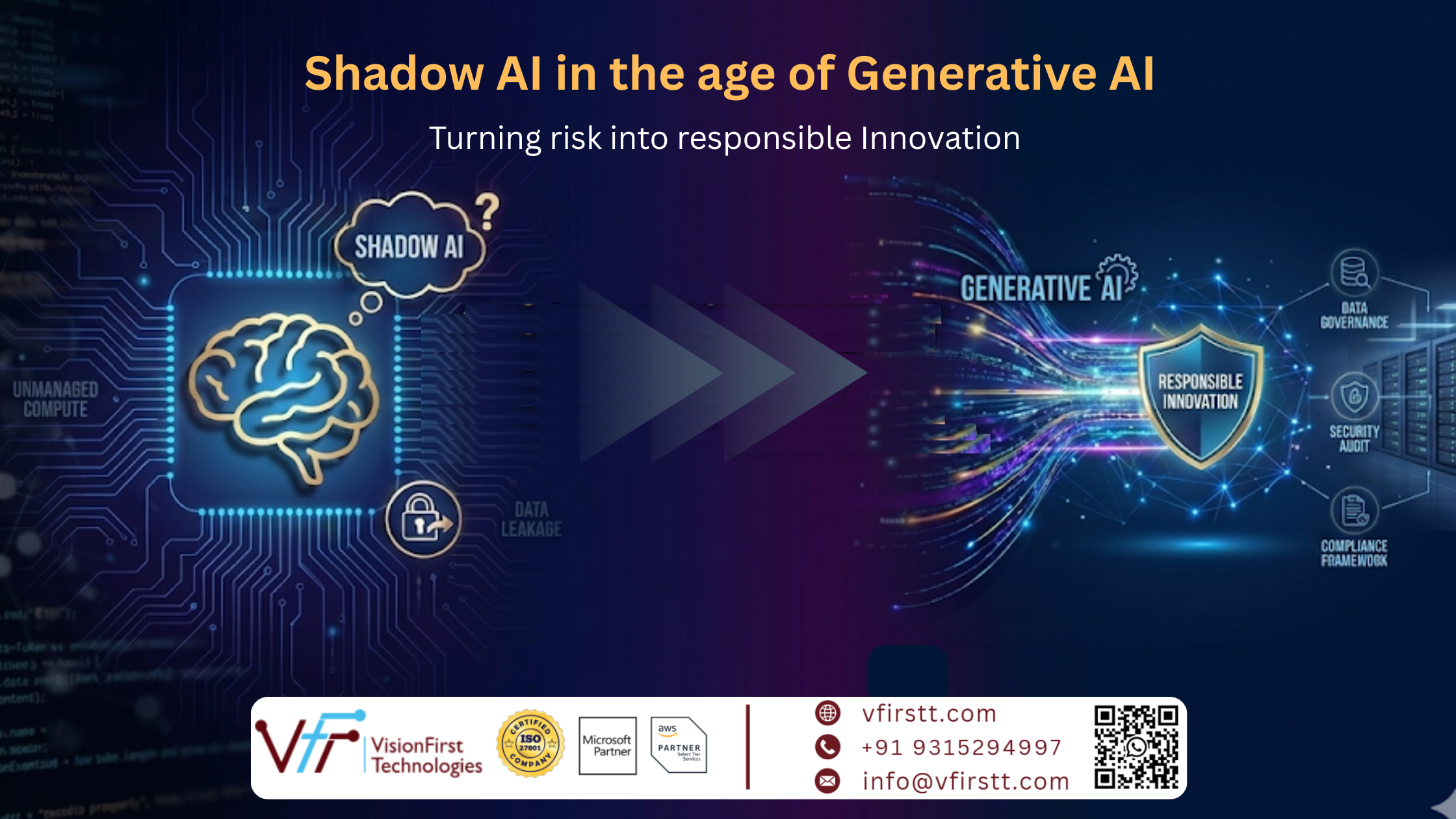
Generative AI is no longer experimental.
It is actively shaping how employees write code, analyze data, create content, and make decisions.
But alongside this rapid adoption, a silent risk has emerged, Shadow AI.
Shadow AI refers to the use of generative AI tools by employees outside approved organizational controls, often with good intentions but serious security implications. While GenAI accelerates productivity, unmanaged usage can expose sensitive data, intellectual property, and regulated information.
At VisionFirst Technologies we believe the solution is not to restrict GenAI – but to enable it securely and responsibly.
What Is Shadow AI?
Shadow AI refers to the use of artificial intelligence or generative AI tools within an organization without formal approval, visibility, or governance from IT, security, or compliance teams.
This often includes employees:
- Pasting internal documents into public GenAI tools
- Using AI to review source code or architecture
- Generating reports, emails, or analysis using unapproved platforms
- Experimenting with AI tools outside enterprise controls
Employees are simply trying to work faster, smarter, and more efficiently.
However, when AI tools are used outside approved boundaries, they create security, privacy, and compliance risks that organizations may not be aware of.
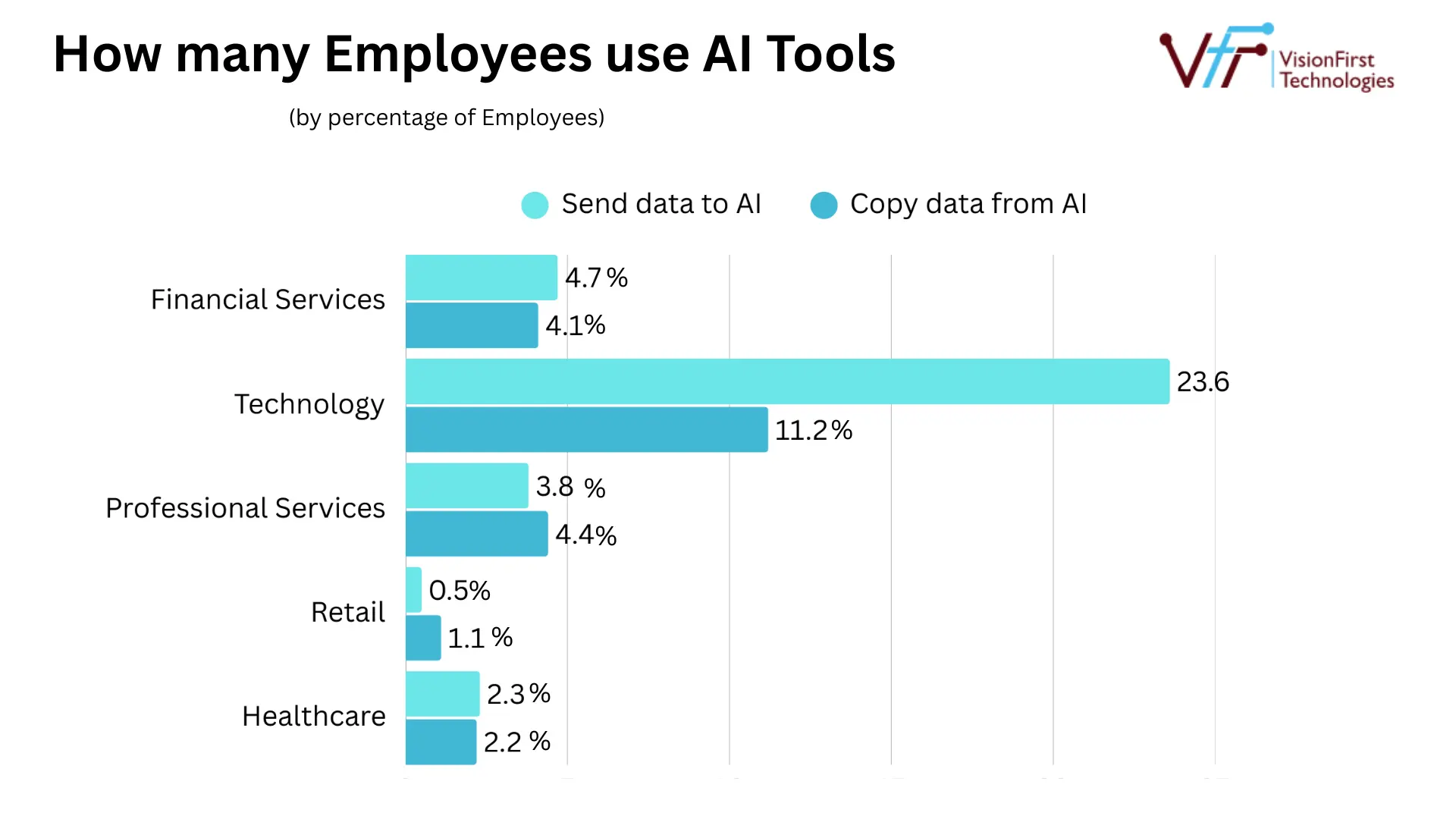
Why Is Shadow AI Growing?
Shadow AI is not emerging because employees are careless – it is growing because generative AI is solving real problems faster than traditional enterprise processes.
Several forces are accelerating this shift:
-
GenAI Is Easier Than Asking for Access
Modern GenAI tools are intuitive, instantly available, and require no formal onboarding. Employees can begin using them within seconds, while enterprise approval processes often take weeks. When productivity gains are immediate, speed naturally takes priority over policy.
-
Pressure to Deliver Faster Outcomes
Teams across engineering, marketing, operations, and support are expected to move faster and do more with fewer resources. GenAI becomes a silent accelerator, helping employees meet expectations even when approved tools or processes are not yet in place.
-
Lack of Clear AI Usage Guidelines
Many organizations adopted GenAI before defining clear policies around acceptable use. Without guidance on what data can be shared, which tools are approved, or how outputs should be validated, employees make individual decisions – often without understanding the security impact.
-
GenAI Feels Safer Than It Is
Unlike traditional security risks, Shadow AI does not appear dangerous. There are no malware warnings, suspicious links, or system alerts. Copying data into an AI prompt feels harmless, even though that data may now exist outside organizational control.
98% of organizations have employees using unsanctioned AI Tools
How Can Organizations Address Shadow AI Risks?
Addressing Shadow AI does not require limiting innovation. It requires bringing generative AI into a secure, governed, and transparent framework that aligns with business objectives.
Successful organizations follow a structured approach.
-
Start with Visibility, Not Restrictions
The first step is understanding where and how GenAI is already being used. Shadow AI cannot be controlled if it remains invisible.
Organizations should focus on:
- Identifying AI tools in use across teams
- Understanding what data is being shared
- Mapping GenAI usage to business processes
-
Establish Clear and Practical AI Usage Policies
Policies must be simple, actionable, and realistic. Overly restrictive policies encourage workarounds.
Effective policies define:
- Approved GenAI tools and platforms
- Types of data that are permitted or prohibited in prompts
- Ownership and accountability for AI-generated outputs
- Validation requirements for critical decisions
-
Embed Security Directly into GenAI Workflows
Security must move closer to the AI layer.
Organizations should integrate:
- Data classification and redaction
- Prompt-level monitoring
- Role-based access controls
- Audit logs for AI interactions
This ensures GenAI adoption aligns with existing security and compliance frameworks.
-
Educate Teams on Responsible GenAI Usage
Awareness is a powerful control. Employees often underestimate GenAI risks because they are unfamiliar with how data is processed and retained.
Targeted training should explain:
- What constitutes sensitive data in AI prompts
- How AI outputs can introduce risk
- When to use approved tools versus experimentation environments
Informed users make safer decisions.
Conclusion: From Shadow AI to Trusted GenAI
Generative AI is redefining how organizations operate, innovate, and compete. Its adoption is no longer optional; it is already embedded in day-to-day work. Shadow AI has emerged not due to misuse, but because GenAI delivers immediate and measurable value.
At VisionFirst Technologies we believe GenAI, and security must evolve together. By removing Shadow AI risk and enabling responsible GenAI adoption, organizations can unlock innovation without compromising trust, compliance, or data integrity.



Why Microsoft Azure Consulting Is Essential for Business Growth in Bengaluru ?

Nexttrophy Backend: Designing a Scalable Microservices Architecture in 2017