Cloud computing has become an important part of modern business operations. Companies of all sizes are using cloud platforms to improve performance, reduce infrastructure costs, increase flexibility, and support digital transformation. Among different cloud platforms, Amazon Web Services (AWS) is one of the most trusted and widely used cloud service providers in the world.
As businesses grow, managing multiple AWS services, accounts, users, billing systems, and security settings becomes more complex. This is where Enterprise AWS Account Management becomes important. It helps businesses manage their AWS environment in a secure, organized, and cost-effective way.
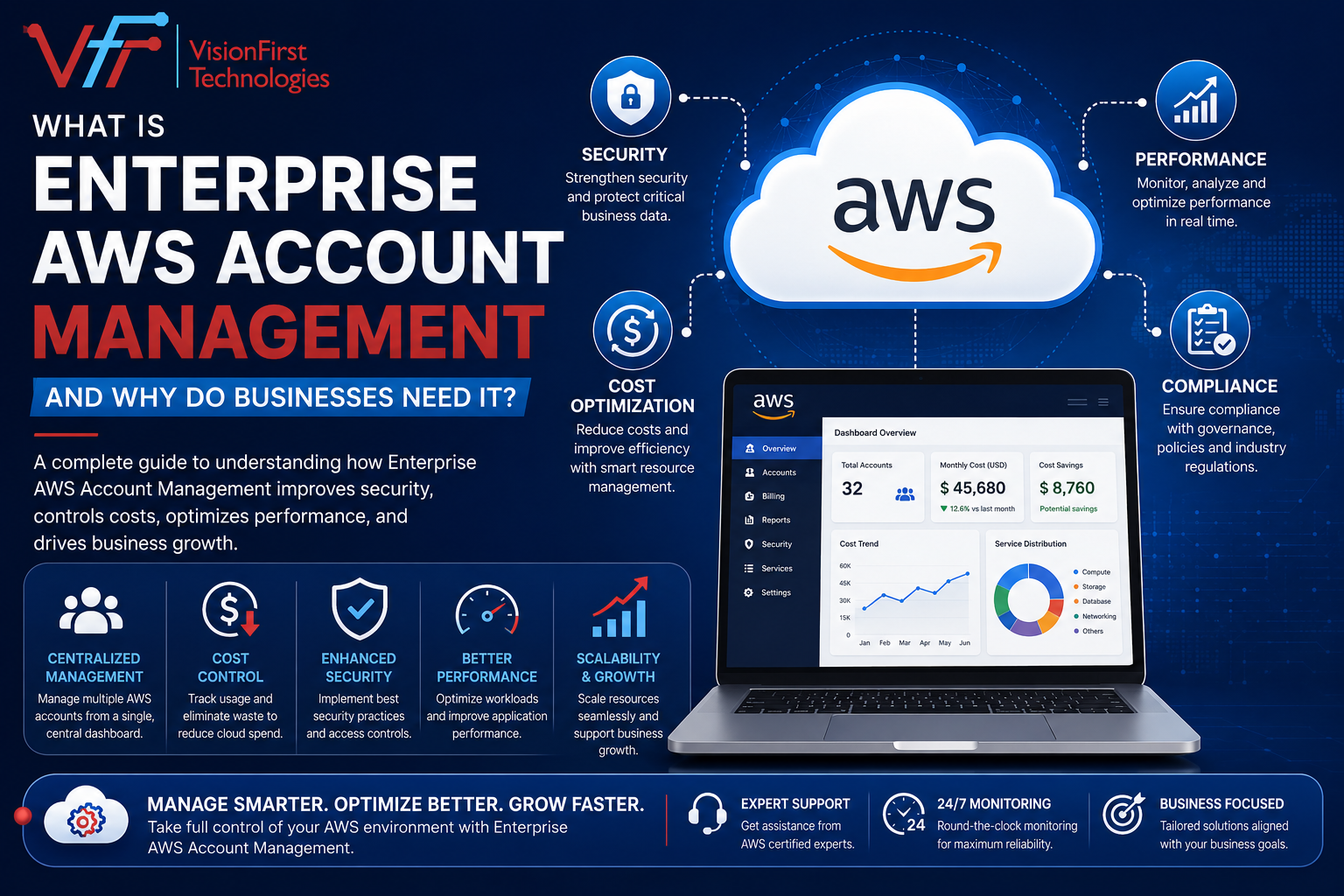
Enterprise AWS Account Management is not only about handling cloud accounts. It also focuses on improving security, controlling cloud costs, monitoring performance, and ensuring smooth cloud operations for long-term business success.
What Is Enterprise AWS Account Management?
Enterprise AWS Account Management is the process of managing, monitoring, optimizing, and securing AWS cloud accounts used by an organization. It includes handling multiple AWS services, billing systems, permissions, workloads, cloud infrastructure, and security policies from a centralized environment.
Businesses often use several AWS accounts for different departments, projects, applications, or clients. Managing all these cloud resources manually can become difficult without a proper account management strategy.
Enterprise AWS Account Management helps organizations:
- Organize multiple AWS accounts
- Control cloud usage and spending
- Improve cloud security
- Manage user access and permissions
- Monitor cloud performance
- Optimize workloads and resources
- Ensure compliance and data protection
This process helps businesses use AWS services more efficiently while reducing operational risks.
Why Businesses Need Enterprise AWS Account Management
1. Better Control Over Multiple AWS Accounts
Large businesses often use different AWS accounts for development, testing, production, and backup environments. Managing these accounts separately can create confusion and increase operational complexity.
Enterprise AWS Account Management provides centralized control where businesses can monitor all AWS resources, services, and billing information from one place. This improves visibility and simplifies cloud management.
2. Improved Cloud Security
Security is one of the biggest concerns for businesses using cloud services. Poor account management can increase the risk of unauthorized access, data leaks, and cyber threats.
Enterprise AWS Account Management helps businesses implement:
- Multi-factor authentication (MFA)
- Identity and Access Management (IAM)
- Role-based access controls
- Data encryption
- Security monitoring and alerts
These security measures help protect sensitive business information and cloud infrastructure.
3. Cost Optimization and Budget Management
Many businesses spend more on cloud services because of unused resources, incorrect configurations, or poor workload management.
AWS Account Management helps companies monitor cloud spending and identify unnecessary costs. Businesses can optimize storage, computing power, and server usage to reduce monthly cloud expenses.
Proper account management also provides detailed billing reports and usage analysis for better financial planning.
Key Features of Enterprise AWS Account Management
Centralized Billing Management
AWS account management helps businesses manage multiple billing accounts through one centralized dashboard. This simplifies payment tracking and cost monitoring.
Resource Monitoring and Performance Tracking
Businesses can monitor cloud resources, applications, databases, and workloads in real time. Performance monitoring helps identify issues quickly and improve system efficiency.
Access and Permission Management
AWS account management allows organizations to control employee access to cloud resources. Companies can define permissions based on roles and responsibilities.
Backup and Disaster Recovery
Enterprise account management includes backup planning and disaster recovery solutions to protect business data from unexpected failures or cyberattacks.
Compliance and Governance
Many industries must follow data protection and compliance regulations. AWS account management helps organizations maintain compliance with industry standards and security policies.
Benefits of Enterprise AWS Account Management
Increased Operational Efficiency
A well-managed AWS environment improves system performance and reduces manual workload. Businesses can automate cloud operations and improve productivity.
Reduced Downtime
Continuous monitoring and proactive maintenance help businesses identify technical problems before they affect operations. This reduces downtime and improves service availability.
Scalability for Business Growth
AWS allows businesses to scale resources according to demand. Enterprise AWS Account Management helps organizations manage scaling efficiently without affecting performance.
Better Decision-Making with Cloud Insights
Businesses receive detailed analytics and reports about cloud performance, resource usage, and costs. These insights support smarter business decisions.
Improved Collaboration
Centralized AWS management makes it easier for teams, developers, and IT departments to work together on cloud projects securely and efficiently.
Common Challenges Businesses Face Without AWS Account Management
Many businesses start using AWS without a proper cloud management strategy. Over time, this creates several operational and security problems.
Uncontrolled Cloud Spending
Without monitoring, businesses may continue paying for unused cloud resources, leading to unnecessary expenses.
Security Risks
Weak access controls and poor account management increase the risk of data breaches and unauthorized access.
Complex Infrastructure Management
Managing multiple AWS accounts manually can become difficult as business operations grow.
Compliance Issues
Businesses working in finance, healthcare, and e-commerce industries must follow strict compliance standards. Poor cloud governance can create legal and security issues.
Performance Problems
Incorrect cloud configurations can reduce application speed, affect customer experience, and increase downtime.
Best Practices for Enterprise AWS Account Management
Use Multi-Account Architecture
Businesses should separate development, testing, and production environments into different AWS accounts for better security and management.
Implement Strong IAM Policies
Role-based access management helps control who can access specific cloud resources and services.
Monitor Cloud Costs Regularly
Businesses should review cloud usage reports frequently to identify cost-saving opportunities.
Enable Cloud Security Monitoring
Continuous monitoring tools help detect unusual activity, security threats, and system vulnerabilities.
Automate Cloud Operations
Automation reduces manual work and improves cloud efficiency through automatic backups, scaling, and monitoring.
How Enterprise AWS Account Management Supports Digital Transformation
Digital transformation is becoming essential for businesses across every industry. Companies are adopting cloud technologies to improve customer experience, automate operations, and support remote work environments.
Enterprise AWS Account Management helps businesses manage this transformation smoothly by providing:
- Flexible cloud infrastructure
- Secure cloud environments
- Scalable business applications
- Reliable data management
- Better operational efficiency
Organizations can focus more on business innovation while cloud management experts handle technical operations.
Industries That Benefit from Enterprise AWS Account Management
Healthcare
Healthcare organizations use AWS for secure patient data management, cloud storage, and telemedicine solutions.
Banking and Finance
Financial institutions require secure and compliant cloud systems for transactions, analytics, and digital banking services.
E-Commerce
Online businesses use AWS to manage websites, applications, payment systems, and customer databases.
Education
Educational institutions use cloud solutions for online learning platforms, student management systems, and digital collaboration.
Manufacturing
Manufacturing companies use AWS for automation, supply chain management, and production monitoring.
Future of Enterprise AWS Management
Cloud technology is evolving rapidly, and businesses are increasing their investment in cloud infrastructure every year. Future AWS management solutions may include:
- AI-powered cloud monitoring
- Automated cloud optimization
- Advanced cybersecurity solutions
- Predictive analytics for cloud performance
- Serverless computing management
Businesses that invest in professional AWS account management today can prepare for future digital growth more effectively.
Conclusion
Enterprise AWS Account Management in India plays an important role in helping businesses manage cloud infrastructure securely and efficiently. It improves security, controls costs, enhances performance, and supports long-term digital transformation.
As cloud environments become more complex, businesses need professional AWS management solutions to reduce risks and improve operational efficiency. A properly managed AWS infrastructure helps organizations scale faster, improve productivity, and focus on business growth without technical difficulties.
Businesses looking for reliable Enterprise AWS Account Management solutions can explore professional cloud services offered by Vision First to improve cloud performance, security, and long-term business operations.