


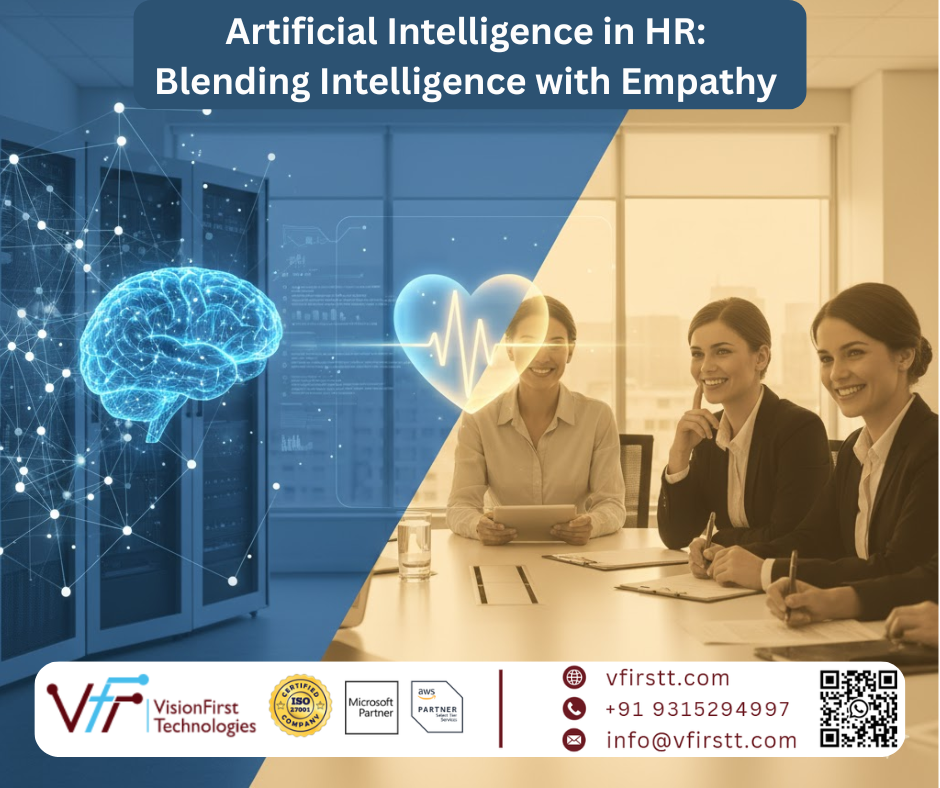
Artificial Intelligence (AI) is no longer a futuristic concept — it’s the present reality transforming industries across the globe. From healthcare to finance, AI has redefined how organizations operate, and Human Resources is no exception.
With the rise of Generative AI development services, HR processes are becoming more predictive, personalized, and human-centered than ever before.
AI in HR: Redefining the Employee Journey
1. Talent Acquisition
AI has revolutionized how companies’ source, assess, and hire talent. For instance, FloCareer, a service organization, uses AI to source diverse candidates from a database of over 169 million professionals. The system also automates interview scheduling, enabling recruiters to focus on meaningful interactions rather than manual coordination.
This AI’s ability has been reducing time-to-hire and improved quality-of-hire in countless organizations.
2. Performance Management
IBM introduced an AI-driven performance management system that provides real-time feedback, identifies development needs, and analyzes performance trends. Within the first year of adoption, IBM reported a 20% increase in employee productivity and a more transparent review process.
This shift helped managers focus less on performance monitoring and more on strategic coaching and employee growth
3. HR Data Analytics
AI-powered HR data analytics helps organizations uncover insights hidden in vast employee datasets — from predicting turnover risks to identifying engagement drivers.
For example, Unilever uses AI-based analytics to assess employee sentiment and engagement levels across its global teams. The result? A 25% improvement in retention among high-performing employees and a more proactive approach to people management.
4. Administrative Excellence
Routine HR tasks often consume valuable time and resources. IBM’s AI agent, for example, assists HR managers during the quarterly promotion cycle by automating data collection and formatting for over 17,000 employees. This automation drastically reduced HR’s administrative burden and freed up time for more strategic, people-focused work.
With the rise of Generative AI development services, HR professionals can create intelligent workflows that anticipate HR needs, making processes faster, more consistent, and highly scalable
Yet, as efficient as AI becomes, it still lacks one vital element — “Know what that is?”

Human Intelligence: The Heartbeat of HR
Human Intelligence (HI) Yes, it is! It Remains the soul of every organization.
Especially in startups and small firms, HR professionals wear multiple hats — managing administrative tasks, maintaining culture, resolving conflicts, and ensuring employee engagement. No matter how advanced technology becomes, it’s the HR person’s emotional intelligence that builds trust and belonging.
HI helps leaders sense the unsaid — the subtle stress behind a smile, or the motivation that drives performance. It’s what transforms a workplace from a process-driven system to a people-centered culture.
Is AI over HI?
AI transforms all the HR functions such as automating hiring, performance reviews, attendance, and analytics.
But in HR, advancement isn’t just about automation. It’s about understanding people, showing empathy, and making ethical choices that data alone can’t define.
AI can tell you who’s underperforming, but HI helps you understand why.
AI can screen resumes for qualifications, but only HI can recognize potential.
AI can process feedback data, but only HI can translate that data into empathetical action
As the saying goes,
“AI can make HR smarter, but only emotional intelligence can make it wiser.”
Case in Point: When Human Empathy Mattered More
Consider a scenario where an AI system flags an employee for underperformance due to declining productivity. The algorithm sees numbers — but not the human behind them.
A HR professional reaches out, only to learn that the employee is struggling with personal loss. Instead of proceeding with disciplinary action, the HR team offers flexible hours and emotional support. Within months, the employee not only recovers but exceeds previous performance levels.
That’s the irreplaceable magic of human intelligence — where empathy bridges what data can’t define.
The Perfect Blend: AI + Human Intelligence
AI should not replace HR professionals; it should empower them. The goal is to build “Human-Augmented AI Systems” where data and empathy coexist.
| HR Process | What AI Can Do | What HI Adds |
| Recruitment | Screen resumes, identify skills and experience | Recognize cultural fit and potential |
| Performance Reviews | Analyze trends, detect anomalies | Understand motivations and challenges |
| Learning & Development | Recommend personalized training | Encourage growth through mentorship |
| Employee Engagement | Monitor Feedback data | Build trust through personal connection |
| Retention Strategy | Predict attrition risks | Create empathy-driven interventions |
Final Thought
- Integrate AI thoughtfully — use Generative AI development tools to automate repetitive tasks and generate data-driven insights.
- Retaining human essence — no AI system can replace emotional intelligence, empathy, and ethical judgment.
- Create hybrid workflows — where AI enhances efficiency and humans ensure compassion.
- Train HR professionals to use AI as a co-pilot, not a replacement.
- Build a culture where technology serves people — not the other way around.
“The future belongs to HR professionals who combine data with empathy — algorithms with understanding.”


AWS Lambda Excel Processing: Cut Costs 90% for Financial Data | BFSI Cloud Solutions

Processing 100 Million messages per day – Confluent Kafka S3 Sink Connector – a Success Story