

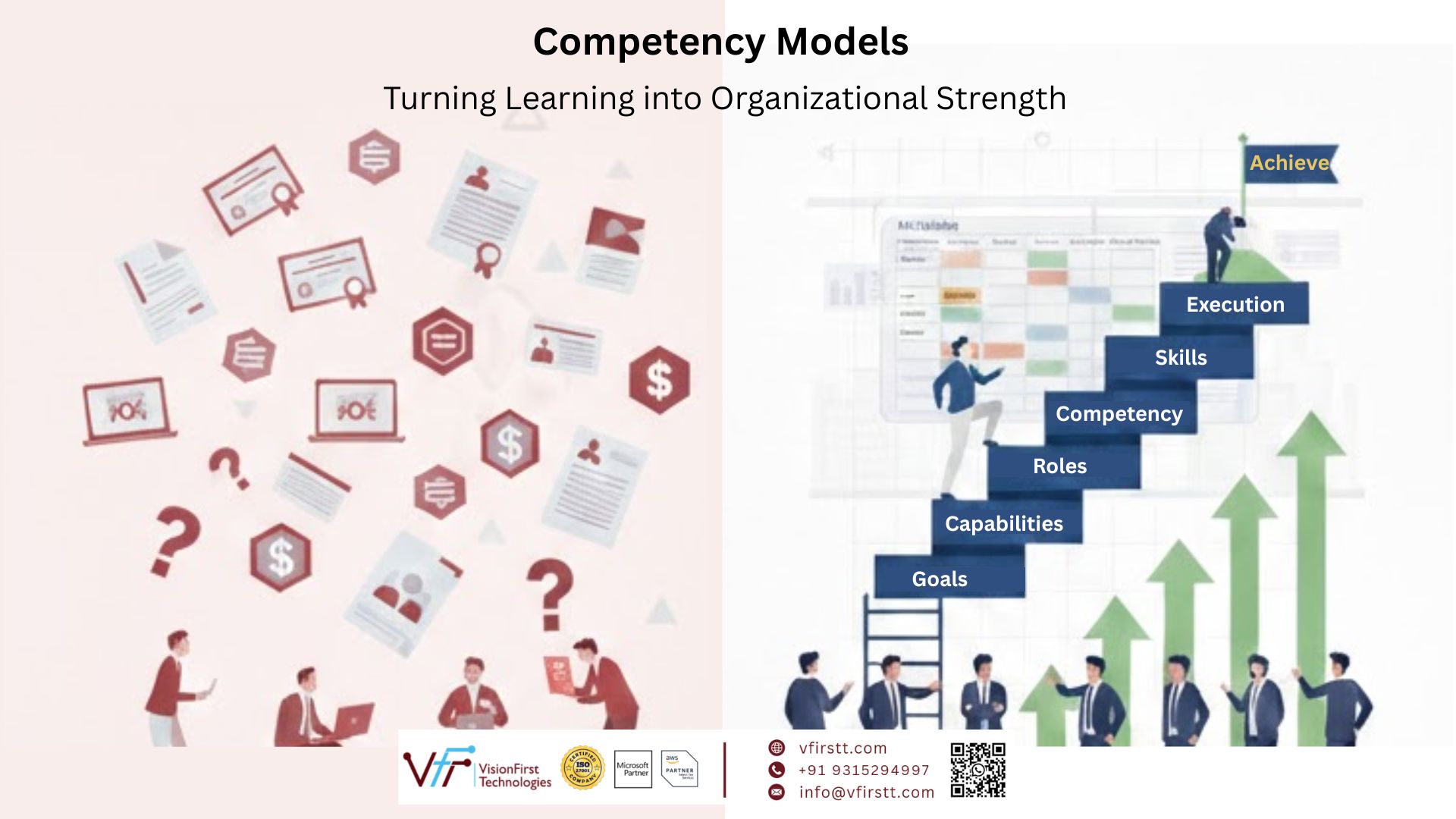
Most organizations today are investing heavily in learning.
Employees attend courses, earn certifications, and constantly upskill themselves.
Yet, when leadership asks:
“Are we actually ready to achieve our business goals with the skills we have?”
The answer is often uncertain.
This gap between learning activity and business readiness is one of the biggest challenges modern organizations face. And this is exactly why competency models are no longer a “nice-to-have” HR initiative; they are a business necessity.
The Real Problem: Skills Exist, But Capability Is Invisible
In many companies, skills exist in pockets:
- Some employees are certified but lack real project exposure
- Some are highly experienced, but their expertise is undocumented
- Managers rely on assumptions rather than structured insight
- Learning happens, but without a clear destination
As organizations grow, this creates serious risks:
- Wrong people on critical projects
- Inconsistent delivery quality
- Reactive hiring
- Unclear career paths
- Learning budgets with unclear ROI
Traditional methods like resumes, certification lists, or informal manager judgment simply don’t scale.
Think about what happened when technologies like cloud, AI, or now GenAI have started becoming mainstream.
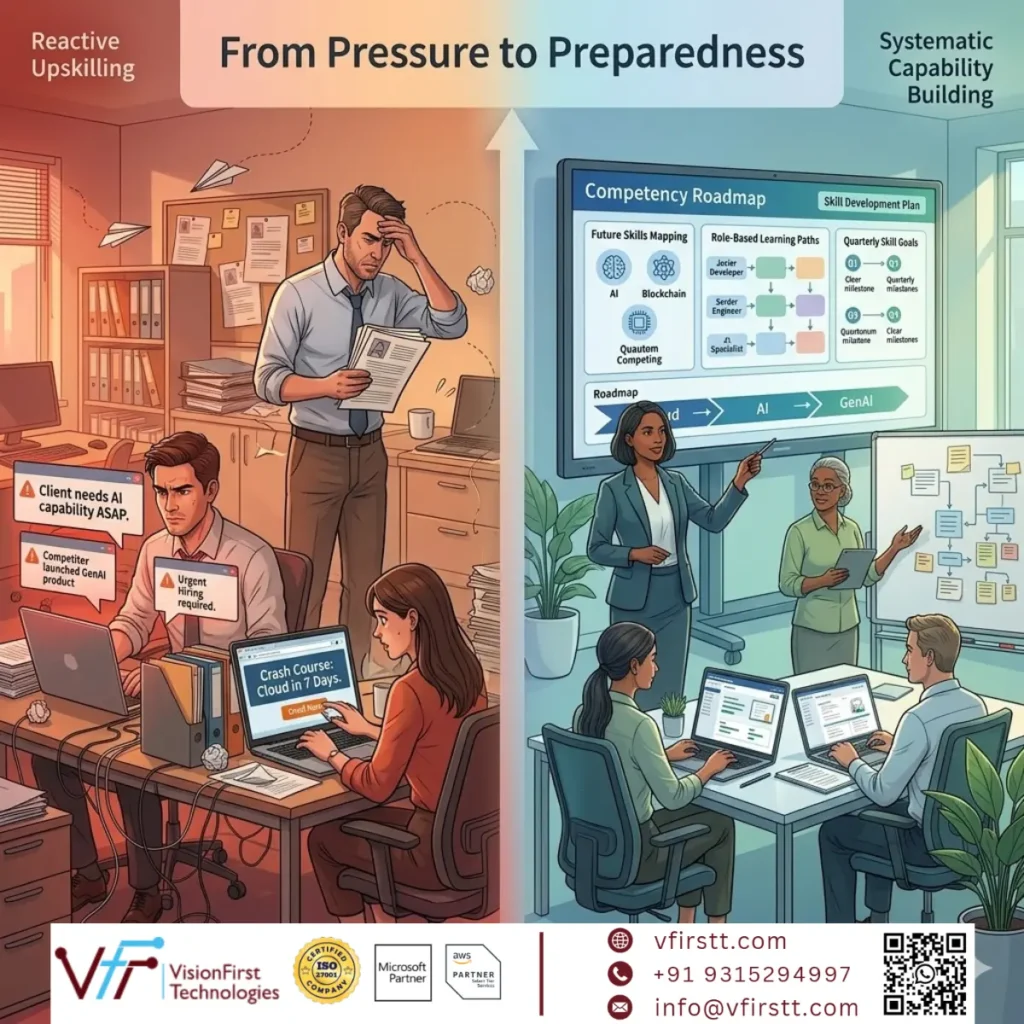
In many organizations, the response didn’t start with planning. It started with pressure.
A client asked for a capability. A competitor launched something new. A project suddenly needed a skill that “someone should know by now.”
That’s when we reacted.
We rushed to identify who might know the technology.
We enrolled people in quick courses.
We hired urgently, often at higher cost.
Not because learning wasn’t happening earlier; but because it wasn’t directed.
A competency model changes this behavior entirely. Instead of waiting to burn our hands, it helps organizations anticipate what skills will matter next. Learning stops being random and becomes intentional, aligned to business goals, market trends, and future roles. Employees don’t just learn more; they learn what actually matters.
That’s the real shift: from reactive upskilling to systematic capability building.
What Is a Competency Model?
A competency model is not just a list of skills.
It is a structured system that defines:
- What capabilities the organization needs to achieve its goals
- What roles are required to build those capabilities
- What skills, behaviors, and experience each role demands
- How proficiency evolves from basic awareness to advanced expertise
- How learning, experience, and performance connect
From Business Vision to Skills on the Ground
Strong competency models always start at the top.
Not with skills.
Not with tools.
But with organizational goals. A competency model translates business goals into people’s capabilities.
For example:
- If the goal is brand recognition, competencies around delivery quality, thought leadership, and customer success become critical.
- If the goal is to become a premium technology partner, advanced technical expertise, certifications, and governance capabilities are mandatory.
- If the goal is profitability and dividends, operational discipline and leadership maturity are non-negotiable.
How a Competency Model Works in Practice
A practical, effective competency model follows a clear flow:
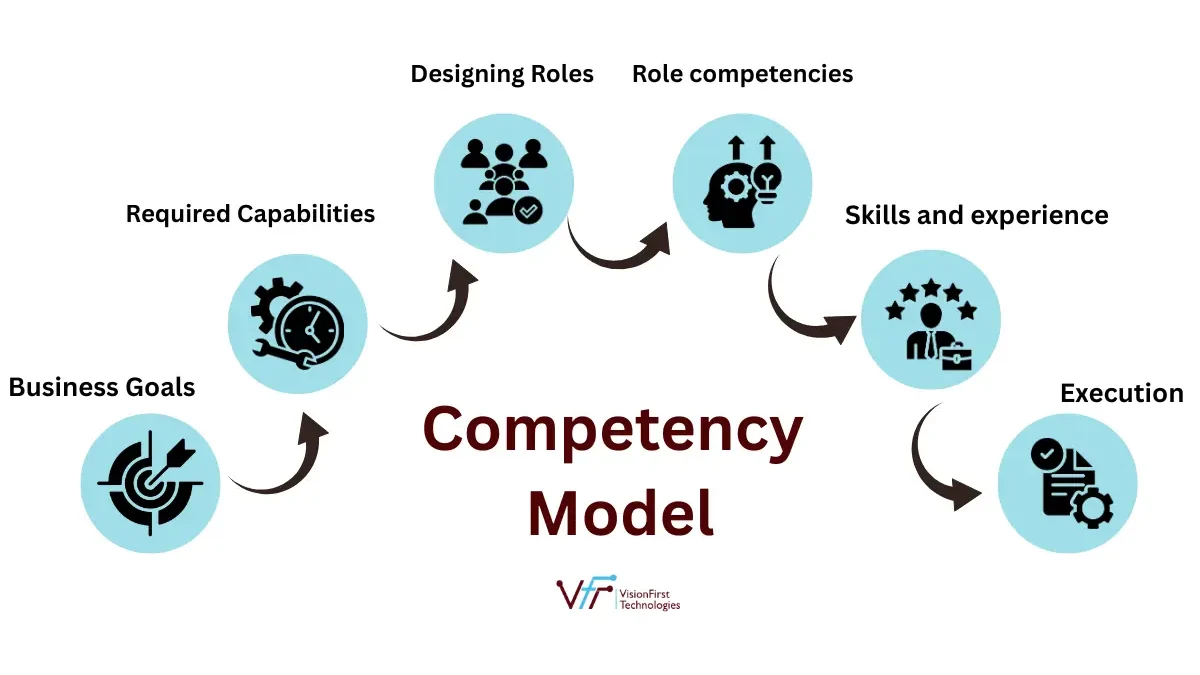
In practice, a competency model starts with organizational goals and translates them into the capabilities the business needs. These capabilities shape the roles required, the competencies expected in each role, and the proficiency levels that define growth. By assessing current competencies and identifying gaps, organizations can take focused actions through learning, exposure, or hiring, turning competency management into a continuous improvement cycle rather than a one-time exercise. This turns competency management into a continuous improvement cycle, not a one-time assessment.
Why Companies Truly Need a Competency Model
For the Organization
- Clear visibility into internal strengths and gaps
- Better project allocation and delivery outcomes
- Reduced dependency on external hiring
- Smarter workforce and succession planning
- Learning investments aligned with strategy
For Managers
- Clear understanding of what growth looks like
- Transparency in expectations
- Direction for learning and certification efforts
- Greater ownership of career development
- Increased engagement and confidence
When employees know where they are and what it takes to move forward, motivation becomes intrinsic.
Starting Small Is the Smartest Approach
Organizations don’t need a perfect framework on day one.
A strong starting point is:
- Focus on critical roles first
- Define simple competency levels
- Use basic tools like forms or spreadsheets
- Involve managers early
- Review and refine regularly
Final Thought: Competency Is the Bridge Between Learning and Results
Competency models are not about control, comparison, or bureaucracy.
They are about:
- Clarity over assumptions
- Growth over guesswork
- Readiness over reaction
In a world where skills are abundant, but capability is uneven, competency models ensure that learning turns into real organizational strength.
And for organizations with ambitious goals, that clarity can make all the difference.


New Labour Codes 2025: What IT Companies Really Need to Know
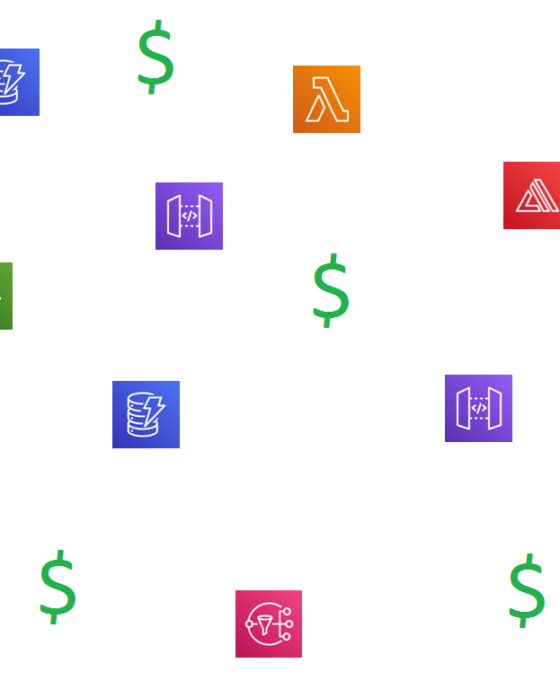
Less than USD 10 per month Web App (Serverless Architecture)